Kaizen: My Journey to be Azure Developer Associate

I’m grateful to share that I’ve successfully renewed my Microsoft Certified: Azure Developer Associate certification few months before its expiration. This journey has taught me valuable lessons, and I’m eager to share my experiences with you.

Exam Overview

Those who take the exam are responsible for participating in all phases of development, including requirements gathering, design, development, deployment, security, maintenance, performance tuning, and monitoring.

The exam consists of 10 sections to measure different Azure skills, and I have passed 8 of them, which are:

  • Explore Azure Functions;
  • Develop Azure Functions;
  • Implement Azure Key Vault (full score!);
  • Implement Azure App Configuration;
  • Monitor App Performance;
  • Manage Container Images in Azure Container Registry (full score!);
  • Work with Azure Cosmos DB;
  • Consume an Azure Cosmos DB for NoSQL change feed using the SDK.

I didn’t pass the section “Implement Azure Container Apps” and scored 0 in “Run Container Images in Azure Container Instances” section. These areas remind me that there is always room for improvement and growth.

The certificate is signed by Microsoft CEO!

The Kaizen Journey

Since 2019, I have not been actively using Azure at my work. I now work with AWS at work, but I still learn Azure on my own. Even though I’m not using Azure at work, I keep learning and growing my cloud computing skills. I share my AWS knowledge with the community, but my heart is still with Azure too. I want to be good at both AWS and Azure!

As a developer working primarily with AWS, taking the Azure certification may seem unconventional, but it’s a wise move. Not only Azure certification allows me to demonstrate my commitment to continuous learning and adaptability, but also having expertise in multiple cloud platforms makes a developer a more attractive candidate in the current job market.

I hope my journey inspires you to pursue your own path of learning and growth. As Riza Marhaban, my senior who is also Senior Associate Director (IT) at NUS told me, certifications are not just about achieving a credential, but about the journey of self-improvement and the positive impact it can have on those around us.

Riza shared with me the Kaizen philosophy. The Kaisan philosophy teaches us to embrace challenges, learn from failures, and strive for excellence. Hence, I apply this philosophy to my own journeys, embracing each step as an opportunity to learn and grow.

Wrap-Up

Renewing my certification has reminded me of the importance of continuous learning. I hope my story inspires you to stay humble, stay hungry, and always strive for excellence.

Together, we learn better!

Kaizen Journey to be Microsoft Certified

In the rapidly evolving fields like software development, staying static in terms of technical skills and knowledge can quickly lead to obsolescence. Hence, the ability to learn independently is a crucial skill in a rapidly changing world. Self-learning allows software developers to acquire new skills and deepen their knowledge in specific areas of interest.

Renew my Azure Developer Associate Certificate

In the September, I was on a business trip to Hanoi, Vietnam. I thus decided to take the opportunity of my time staying in hotel after work to prepare for my Microsoft certificate renewal test.

To Hanoi, from Singapore!

Well, it took me some time to hit refresh on the latest updates in Microsoft Azure because in Samsung, I don’t work daily with it. Fortunately, thanks to Microsoft Learn, I am able to quickly pickup the new knowledge after going through the online resources on the Microsoft Learn platform.

As usual, I took down the notes of what I learned from Microsoft Learn. This year, the exam focuses on the following topics.

  • Microsoft Identity Platform;
  • Azure Key Vault;
  • Azure App Configuration and Monitoring;
  • Azure Container Apps;
  • CosmosDB.

I did pretty well in all the topics above with the exception of Azure Container Apps, where my responses to questions related to Azure Container Registry were unfortunately incorrect. However, I am pleased to share that despite this challenge, I successfully passed the renewal assessment on my first attempt.

Achieving success in my Azure exam at midnight in Hanoi.

Participating in the AI Skills Challenge

Last month, I also participated in an online Microsoft event. It is the Microsoft Learn AI Skills Challenge where we are allowed to choose to complete one out of the four challenges from Machine Learning Challenge, Cognitive Services Challenge, Machine Learning Operations (MLOps) Challenge, and AI Builder Challenge.

The AI Builder Challenge introduces us to AI Builder. AI Builder is a Microsoft Power Platform capability that provides AI models that are designed to optimise the business processes.

The challenge shows us how to build models, and explains how we can use them in Power Apps and Power Automate. Throughout the online course, we can learn how to create topics, custom entities, and variables to capture, extract, and store information in a bot.

Why Taking Microsoft AI Challenge?

Users login the Samsung app using face recognition technology from Microsoft AI (Image Credit: cyberlink.com)

Since last year, I have been working in the AI module in a Samsung app. I am proud to have the opportunity to learn about Microsoft AI and use it in our project to, for example, allow users login to our app using the face recognition feature in Microsoft AI.

Therefore, embracing this challenge provides me with a valuable opportunity to gain a deeper understanding of Microsoft AI, with a specific focus on the AI Builder. The AI Builder platform empowers us to create models tailored to our business requirements or to opt for prebuilt models designed to seamlessly address a wide array of common business scenarios.

In August, I finally completed the challenge and received my certificate from Microsoft.

WRAP-UP

By adopting a growth mindset, applying Kaizen principles, and following a structured learning plan, we can embark on our self-learning journey and emerge as a certified professional.

Besides Microsoft Learn, depends on what you’d like to learn, you can enroll in other online courses on platforms like Coursera, Udemy, and edX which offer comprehensive courses with video lectures, quizzes, and labs.

Once you have chosen your certification, create a structured learning plan. You can then proceed to outline the topics covered in the exam objectives and allocate specific time slots for each.

Anyway, remember, continuous learning is the path to excellence, and getting certification is only one of the steps in that direction. Just as software development involves iterations, so does our learning journey. We shall continuously refine our technical skills and knowledge.

Learning to Learn

The fast pace of change in today’s world means we must understand and quickly respond to changes. Hence, in order to survive and be successful in today’s VUCA world, we need to constantly scan for growth opportunities and be willing to learn new skills.

Working in software industry helps me to realise that with all the disruptions in the modern world, especially technology, ongoing skill acquisition is critical to persistent professional relevance. We shall always look for ways to stretch ourselves to get ahead.

Even though I have been dealing with cloud computing, especially Microsoft Azure, for more than 10 years in my career and study, I still would like to find out how well I compare with my peers instead of thinking that I’m already fine at this area. Hence, with that in mind, I focus on learning Microsoft Azure development related skills on Microsoft Learn during the holiday.

Make the Most of Our Limited Learning Time

So much to learn, so little time.

We all have very little time for learning outside of our work. Combine time we have for learning and the importance of the skills, we can get a simple 2×2 matrix with four quadrants.

2×2 matrix to help prioritizing skills to learn (Reference: Marc Zao-Sanders)

I don’t have much time to keep my cloud computing knowledge relevant because nowadays I focus more on desktop application development. Hence, I decided to give myself a one-week break from work and schedule 6-7 hours each day for learning in the holiday.

In order to make sure we’re investing our time wisely, we shall focus on learning what is needed. Unless we need the skill for our job or a future position, it’s better not to spend time and money for training on that skill because learning is an investment and we shall figure out what the return will be. This is why I choose to learn more about developing cloud apps on Microsoft Azure because that has been what I’m doing at work in the past decade.

To better achieve my goals in self learning, I’ve also identified the right learning materials before I get started. Since I already have the experience of developing modern cloud applications early in my career, I choose to focus only on going through all the 43 relevant modules available on the Microsoft Learn.

Make Learning a Lifelong Habit

No matter which technology era we are in, the world will always belong to people who are always keeping themselves up to date. Hence, lifelong learning is a habit many of us would like to emulate.

Before we start our learning journey, we need to set realistic goals, i.e. goals that are attainable, because there are limits to what we can learn. In addition, as we discussed earlier, we need to ask ourselves how much time and energy we can give to our self learning. We have to understand that learning a skill takes extreme commitment, so we can’t get very far on the journey of self learning if we don’t plan it properly.

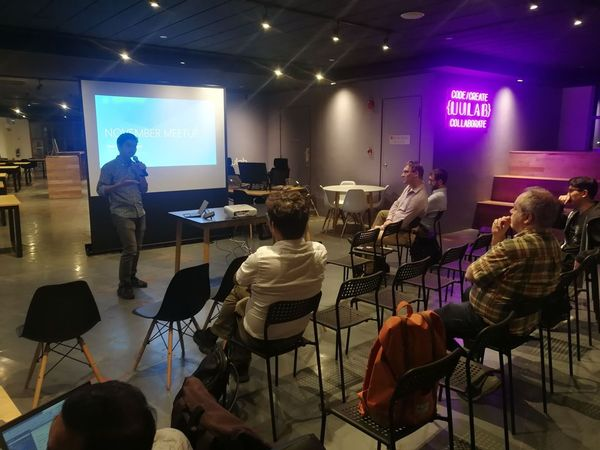
Learning is hard work but it also can be fun, especially when we are learning together with like-minded people. Don’t try to learn alone, otherwise self learning can feel over-whelming. For example, besides learning from online tutorials, I also join local software development groups where members are mostly developers who love to share and learn from each other.

Azure Community Singapore, for all who are interested in cloud technology.

Finally, to improve our ability to learn, we also have to unlearn, i.e. choose an alternative mental model or paradigm. We should acknowledge that old mental model is not always relevant or effective. When we fail, we also should avoid defending ourselves and capture the lessons we’ve learned.

Certification and Exam

I’m now a Microsoft certified Azure Developer Associate after I passed their exam AZ-204 in November 2021.

The exam is not difficult but it’s definitely not easy as well.

The exam tests not only our knowledge in developing cloud solutions with Azure services such as Azure Compute and Storage Account, but also our understanding of cloud security and Azure services troubleshooting.

Clearing all the relevant modules on Microsoft Learn does not guarantee that one will pass the exam easily. In fact, it’s the skills and knowledge I gain from work and personal projects help me a lot in the exam, for example the service bus implementation that I learnt last year when I was building a POC for a container trailer tracking system.

How Microsoft Learn helps in my self learning is that it provides an opportunity for me to learn in a free sandbox environment. In addition, the learning materials on the platform are normally best practices to follow. Hence, by learning on Microsoft Learn, I find out some of the mistakes I’ve made in the past and things that I can improve, for example resource management with tags, RBAC, VNet setup, etc.

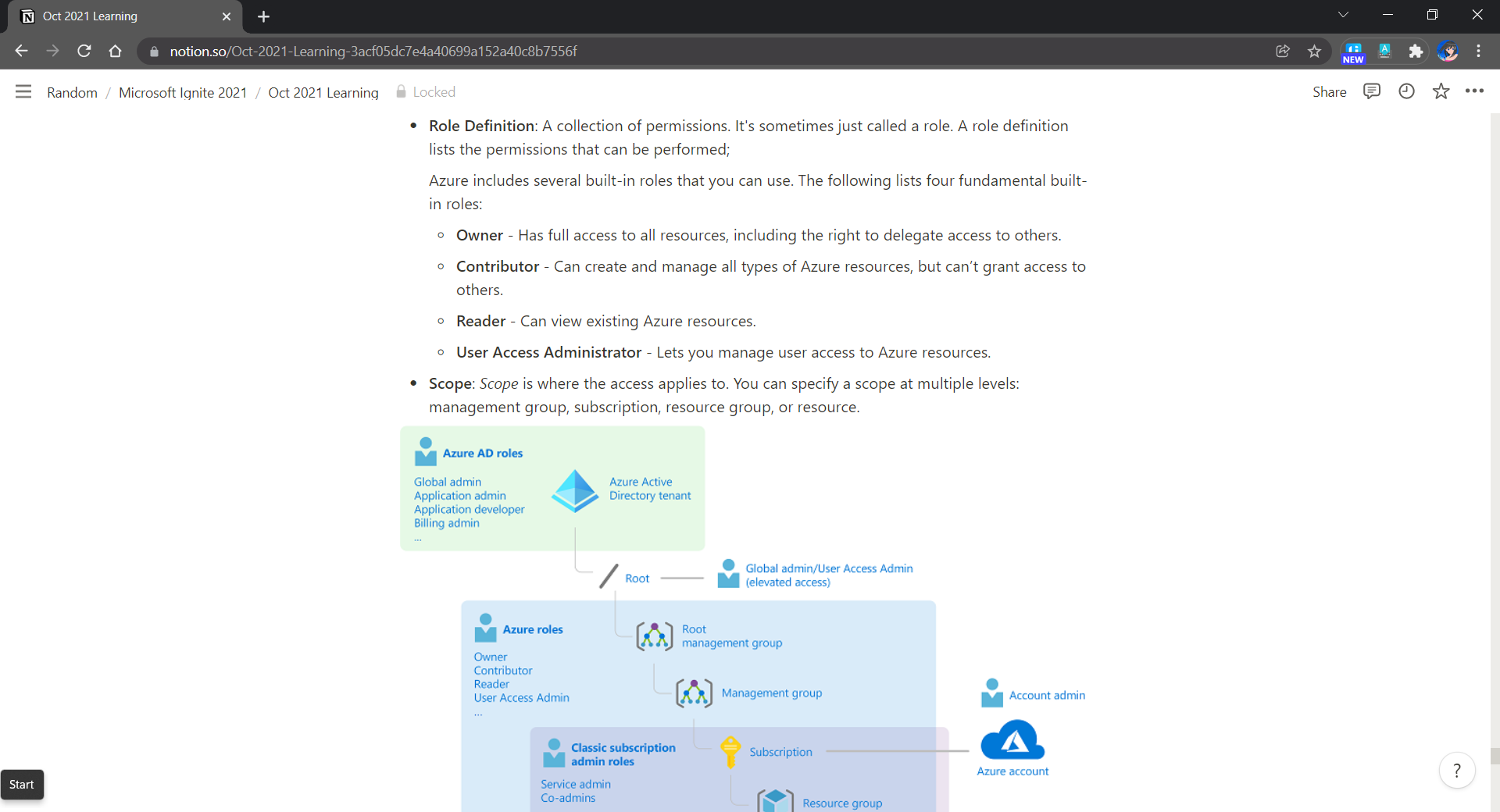
Notes taken when I was going through the learning materials on Microsoft Learn.

I use Notion to take notes. Notion is a great tool to keep our notes clean and organised. Taking notes helps me to do a last-minute quick revision.

Conclusion

In a fast-moving world, being able to learn new skills helps in our life. There are many ways to learn continuously in our life. Earning certificates by going through challenging exams is just one of the methods. You know what works for yourself, do more of it.

Stay hungry. Stay foolish.

References

Kaizen: Embark on My AI Certification Journey

Today, I’m finally getting recognised by Microsoft as a Microsoft Certified: Azure Artificial Intelligence (AI) Fundamentals.

Nowadays, in many of the industries, we hear words like AI, Machine Learning, and Deep Learning. The so-called AI revolution is here to stay and shows no signs of slowing. Hence, it’s getting more and more important to equip ourselves today for the future of tomorrow with relevant knowledge about AI.

In addition, big players in the AI industry such as Microsoft have made AI learning easier for anyone who has an interest in the AI field. In August 2021, Rene Modery, Microsoft MVP, shared on his LinkedIn profile about how to take a Microsoft Certification exam for free and Azure AI Fundamental certification is one of them. Without the discount, we will need to pay USD 106 just to take the Azure AI Fundamental certification exam in Singapore. Hence, this is a good opportunity for us to take the exam now while the discount is still available.

Why Am I Taking Certification Exam?

One word, Kaizen.

Kaizen is the Japanese term for continuous improvement. I first learnt about this concept from Riza Marhaban, who is also my mentor in my current workplace, in one of the Singapore .NET Community meetups last year. In his talk, Riza talked about how continuous improvement helped a developer to grow and to stay relevant in the ever-changing IT industry.

Riza’s sharing about Kaizen in Singapore .NET Developers Community meetup.

Yes, professional working experience is great. However, continuous learning and having the ability to demonstrate one’s skills through personal projects and certifications is great as well. Hence, after taking the online Azure AI training course, I decided to take the Microsoft Certificate exam, a way to verify my skills and unlock opportunities.

My Learning Journey

After I received my 2nd dose of the COVID-19 vaccination, I took a one-week leave to rest. During this period of time, every day I spent about 2-3 hours on average to go through the learning materials on Microsoft Learn.

To help us better prepared for the exam, our friendly Microsoft Learn has offered an online free learning path that we can learn at our own pace. I finished all the relevant modules within 7 days.

In addition, in order to be eligible for the free exam, I also spent another one day of my leave to attend the Microsoft Azure Virtual Training session on AI Fundamentals.

When I was going through the learning materials, I also took down important notes on Notion, which is a great tool for keeping our notes and documents, for future reference. Taking notes doesn’t only help me to learn better but also provide me an easier exam revision.

Studying for exam is a time of great stress. In fact, I was also busy at work at the same time. Hence, in order to destress, everyday I will find some time to login to Genshin Impact to travel in the virtual world and enjoy the nice view.

Feeling burned out, emotionally drained, or mentally exhausted? Play games with friends to destress! (Image Source: Genshin Impact)

The Exam

The certification exam, i.e. AI-900, has five main sections, i.e.

  • AI workloads and consideration;
  • Fundamental principles of ML on Azure;
  • Computer Vision workloads on Azure;
  • Natural Language Processing (NLP) workloads on Azure;
  • Conversational AI workloads on Azure.

In total, there are 40+ questions that we must answer within 45 minutes. This makes the exam a little difficult.

Based on my experience, as long as one has common sense and fully understands the learning materials on Microsoft Learn, it’s quite easy to pass the exam, which is to score at least 700 points only.

I choose to take the certification exam at NTUC Learning Hub located at Bras Basah. (Image Source: Wikimedia Commons)

WANNA BE Certified by Microsoft?

If you are new to Microsoft Certification and you’d like to find out more about their exams, feel free to check out the Microsoft Certifications web page.

Together, we learn better.