Beyond the Cert: In the Age of AI

For the fourth consecutive year, I have renewed my Azure Developer Associate certification. It is a valuable discipline that keeps my knowledge of the Azure ecosystem current and sharp. The performance report I received this year was particularly insightful, highlighting both my strengths in security fundamentals and the expected gaps in platform-specific nuances, given my recent work in AWS.

Objectives

Renewing Azure certification is a hallmark of a professional craftsman because it sharpens our tools, knowing our trade. For a junior or mid-level engineer, this path of structured learning and certification is the non-negotiable foundation of a solid career. It is the path I walked myself. It builds the grammar of our trade.

However, for a senior engineer, for an architect, the game has changed. The world is now saturated with competent craftsmen who know the grammar. In the age of AI-assisted coding and brutal corporate “flattening,” simply knowing the tools is no longer a defensible position. It has become table stakes.

The paradox of the senior cloud software engineer is that the very map that got us here, i.e. the structured curriculum and the certification path, is insufficient to guide us to the next level. The renewal assessment results for Microsoft Certified: Azure Developer Associate I received was a perfect map of the existing territory. However, an architect’s job is not to be a master of the known world. It is to be a cartographer of the unknown. The report correctly identified that I need to master Azure specific trade-offs, like choosing ‘Session’ consistency over ‘Strong’ for low-latency scenarios in CosmosDB. The senior engineer learns that rule. The architect must ask a deeper question: “How can I build a model that predicts the precise cost and P99 latency impact of that trade-off for my specific workload, before I write a single line of code?”

Attending AWS Singapore User Group monthly meetup.

About the Results

Let’s make this concrete by looking at the renewal assessment report itself. It was a gift, not because of the score, but because it is a perfect case study in the difference between the Senior Engineer’s path and the Architect’s.

Where the report suggests mastering Azure Cosmos DB five consistency levels, it is prescribing an act of knowledge consumption. The architect’s impulse is to ask a different question entirely: “How can I quantify the trade-off?” I do not just want to know that Session is faster than Strong. I should know, for a given workload, how much faster, at what dollar cost per million requests, and with what measurable impact on data integrity. The architect’s response is to build a model to turn the vendor’s qualitative best practice into a quantitative, predictive economic decision.

This pattern continues with managed services. The report correctly noted my failure to memorise the specific implementation of Azure Container Apps. The path it offers is to better learn the abstraction. The architect’s path is to become professionally paranoid about abstractions. The question is not “What is Container Apps?” but “Why does this abstraction exist, and what are its hidden costs and failure modes?” The architect’s response is to design experiments or simulations to stress-test the abstraction and discover its true operational boundaries, not just to read its documentation.

DHH has just slain the dragon of Cloud Dependency, the largest, most fearsome dragon in our entire cloud industry. (Twitter Source: DHH)

This is the new mandate for senior engineers in this new world where we keep on listening senior engineers being out of work: We must evolve from being consumers of complexity to being creators of clarity. We must move beyond mastering the vendor’s pre-defined solutions and begin forging our own instruments to see the future.

From Cert to Personal Project

This is why, in parallel to maintaining my certifications, I have embarked on a different kind of professional development. It is a path of deep, first-principles creation. I am building a discrete event simulation engine not as a personal hobby project, but as a way to understand more about the most expensive and unpredictable problems in our industry. My certification proves I can solve problems the “Azure way.” This new work is about discovering the the fundamental truths that govern all cloud platforms.

Certifications are the foundation. They are the bedrock of our shared knowledge. However, they are not the lighthouse. In this new era, we must be both.

AWS + Azure.

Certifications are an essential foundation. They represent the bedrock of our shared professional knowledge and a commitment to maintaining a common standard of excellence. However they are not, by themselves, the final destination.

Therefore, my next major “proof-of-work” will not be another certificate. It will be the first in a series of public, data-driven case studies derived from my personal project.

Ultimately, a certificate proves that we are qualified and contributing members of our professional ecosystem. This next body of work is intended to prove something more than that. We need to actively solve the complex, high-impact problems that challenge our industry. In this new era, demonstrating both our foundational knowledge and our capacity to create new value is no longer an aspiration. Instead, it is the new standard.

Together, we learn better.

Kaizen: My Journey to be Azure Developer Associate

I’m grateful to share that I’ve successfully renewed my Microsoft Certified: Azure Developer Associate certification few months before its expiration. This journey has taught me valuable lessons, and I’m eager to share my experiences with you.

Exam Overview

Those who take the exam are responsible for participating in all phases of development, including requirements gathering, design, development, deployment, security, maintenance, performance tuning, and monitoring.

The exam consists of 10 sections to measure different Azure skills, and I have passed 8 of them, which are:

  • Explore Azure Functions;
  • Develop Azure Functions;
  • Implement Azure Key Vault (full score!);
  • Implement Azure App Configuration;
  • Monitor App Performance;
  • Manage Container Images in Azure Container Registry (full score!);
  • Work with Azure Cosmos DB;
  • Consume an Azure Cosmos DB for NoSQL change feed using the SDK.

I didn’t pass the section “Implement Azure Container Apps” and scored 0 in “Run Container Images in Azure Container Instances” section. These areas remind me that there is always room for improvement and growth.

The certificate is signed by Microsoft CEO!

The Kaizen Journey

Since 2019, I have not been actively using Azure at my work. I now work with AWS at work, but I still learn Azure on my own. Even though I’m not using Azure at work, I keep learning and growing my cloud computing skills. I share my AWS knowledge with the community, but my heart is still with Azure too. I want to be good at both AWS and Azure!

As a developer working primarily with AWS, taking the Azure certification may seem unconventional, but it’s a wise move. Not only Azure certification allows me to demonstrate my commitment to continuous learning and adaptability, but also having expertise in multiple cloud platforms makes a developer a more attractive candidate in the current job market.

I hope my journey inspires you to pursue your own path of learning and growth. As Riza Marhaban, my senior who is also Senior Associate Director (IT) at NUS told me, certifications are not just about achieving a credential, but about the journey of self-improvement and the positive impact it can have on those around us.

Riza shared with me the Kaizen philosophy. The Kaisan philosophy teaches us to embrace challenges, learn from failures, and strive for excellence. Hence, I apply this philosophy to my own journeys, embracing each step as an opportunity to learn and grow.

Wrap-Up

Renewing my certification has reminded me of the importance of continuous learning. I hope my story inspires you to stay humble, stay hungry, and always strive for excellence.

Together, we learn better!

Migrate to TLS 1.2 for Azure Blob Storage

Objective

In November 2023, Azure conveyed through an email notification that, starting from 31st October 2024, all interactions with their services must be safeguarded using Transport Layer Security (TLS) version 1.2 or later. Post this date, their support for TLS versions 1.0 and 1.1 will be discontinued.

By default, Azure Storage already supports TLS 1.2 on public HTTPS endpoints. However, for some companies, they are still using TLS 1.0 or 1.1. Hence, to maintain their connections to Azure Storage, they have to update their OS and apps to support TLS 1.2.

About TLS

The history of TLS can be traced back to SSL.

SSL stands for “Secure Sockets Layer,” and it was developed by Netscape in the 1990s. SSL was one of the earliest cryptographic protocols developed to provide secure communication over a computer network.

SSL has been found to have several vulnerabilities over time, and these issues have led to its deprecation in favor of more secure protocols like TLS. In 2019, TLS 1.0 was introduced as an improvement over SSL. Nowadays, while the term “SSL” is still commonly used colloquially to refer to the broader category of secure protocols, it typically means TLS.

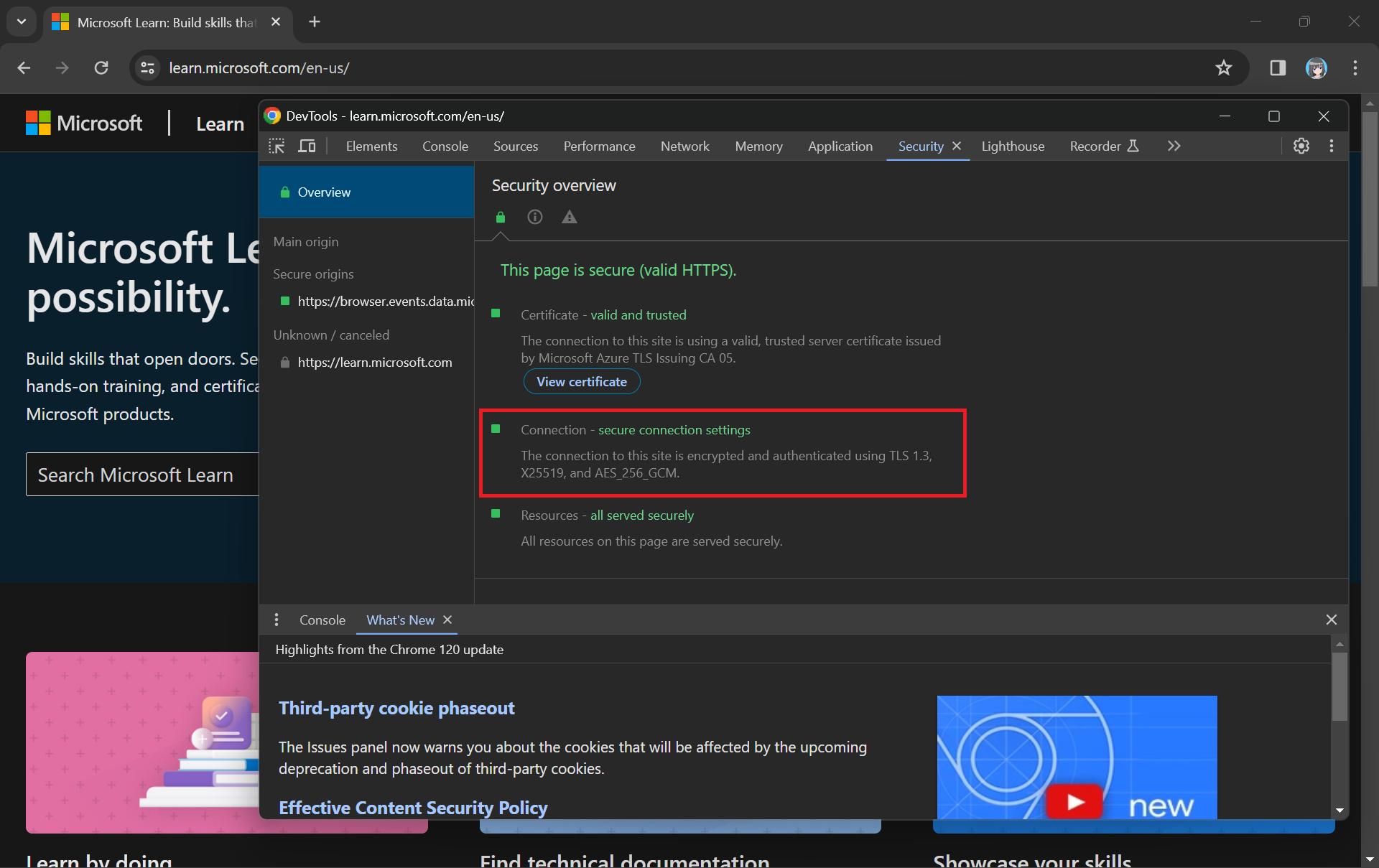
When we see “https://” in the URL and the padlock icon, it means that the website is using either TLS or SSL to encrypt the connection.

While TLS addressed some SSL vulnerabilities, it still had weaknesses, and over time, security researchers identified new threats and attacks. Subsequent versions of TLS, i.e. TLS 1.1, TLS 1.2, and TLS 1.3, were developed to further enhance security and address vulnerabilities.

Why TLS 1.2?

By the mid-2010s, it became increasingly clear that TLS 1.2 was a more secure choice, and we were encouraged to upgrade our systems to support it instead. TLS 1.2 introduced new and stronger cipher suites, including Advanced Encryption Standard (AES) cipher suites, providing better security compared to older algorithms.

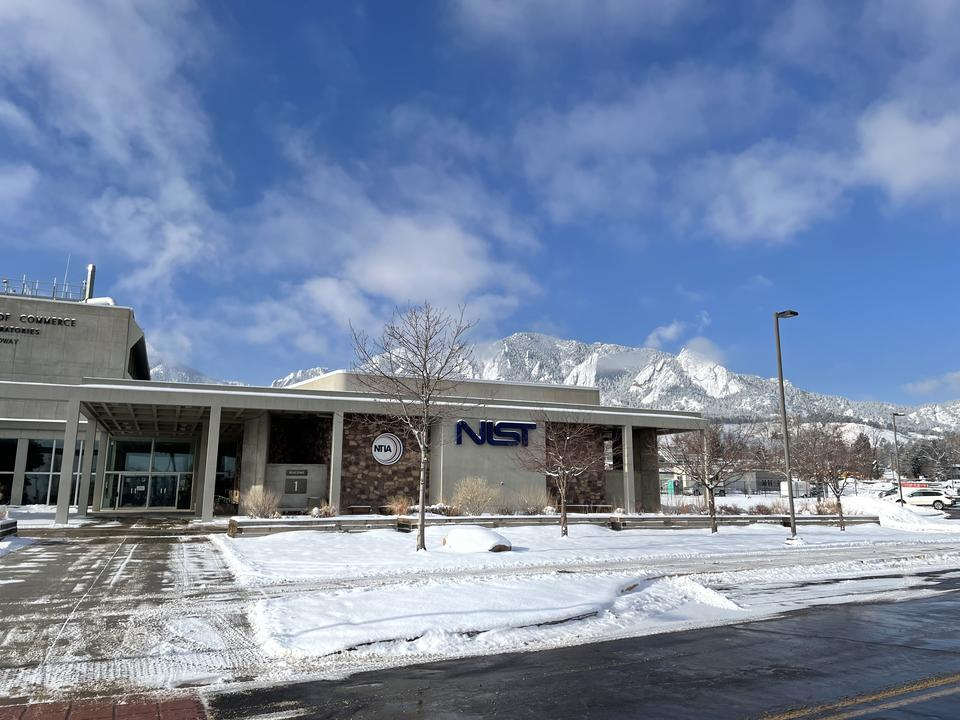
Older TLS versions (1.0 and 1.1) are deprecated and removed to meet regulatory standards from NIST (National Institute of Standards and Technologies). (Photo Credit: R. Jacobson/NIST)

Ten years after TLS 1.2 was officially released as a standardised protocol, TLS 1.3 was introduced by the Internet Engineering Task Force (IETF).

The coexistence of TLS 1.2 and TLS 1.3 is currently part of a transitional approach, allowing organisations to support older clients that may not yet have adopted TLS 1.3.

For Microsoft Azure, if the service we are using still have a dependency on TLS 1.0 or 1.1, we are advised to migrate them to TLS 1.2 or 1.3 by 31 October 2024.

Monitoring TLS Version of Requests

Before we enabling that, we should setup logging to make sure that our Azure policy is working as intended. Here, we will be using Azure Monitor.

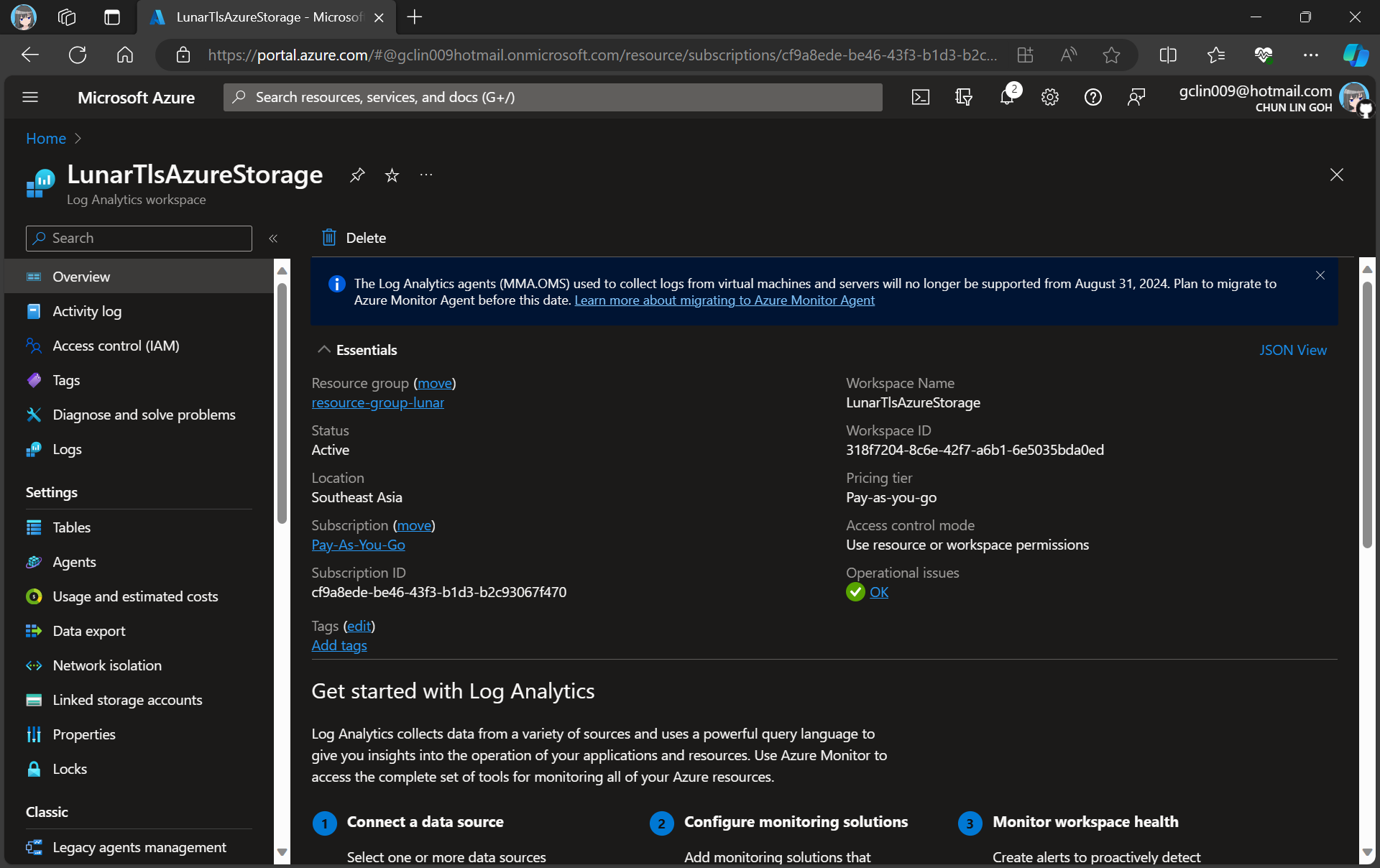
For demonstration purpose, we will create a new Log Analytics workspace called “LunarTlsAzureStorage”.

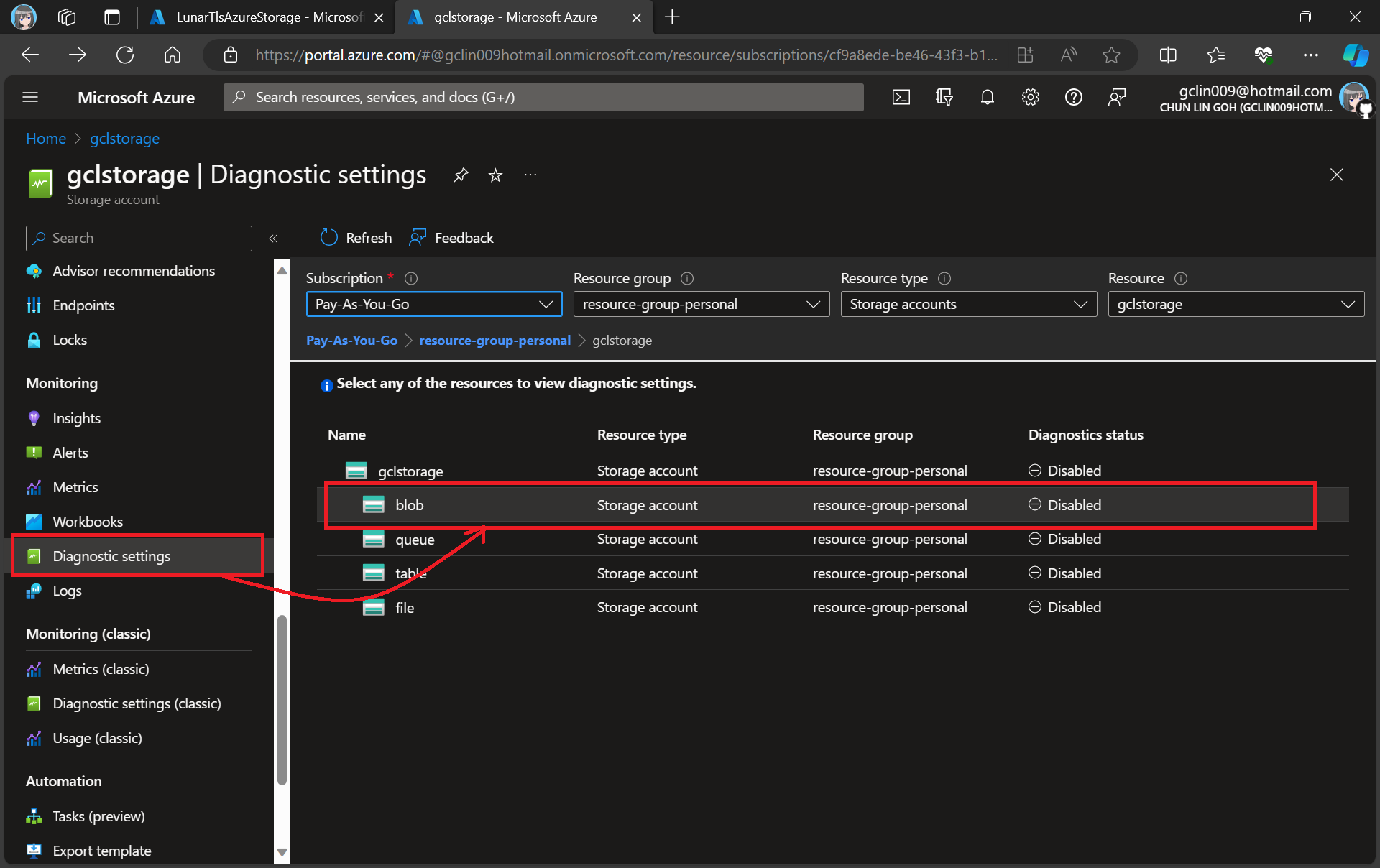
In this article, we will only be logging requests for the Blob Storage, hence, we will be setting up the Diagnostic of the Storage Account as shown in the screenshot below.

Adding new diagnostic settings for blob.

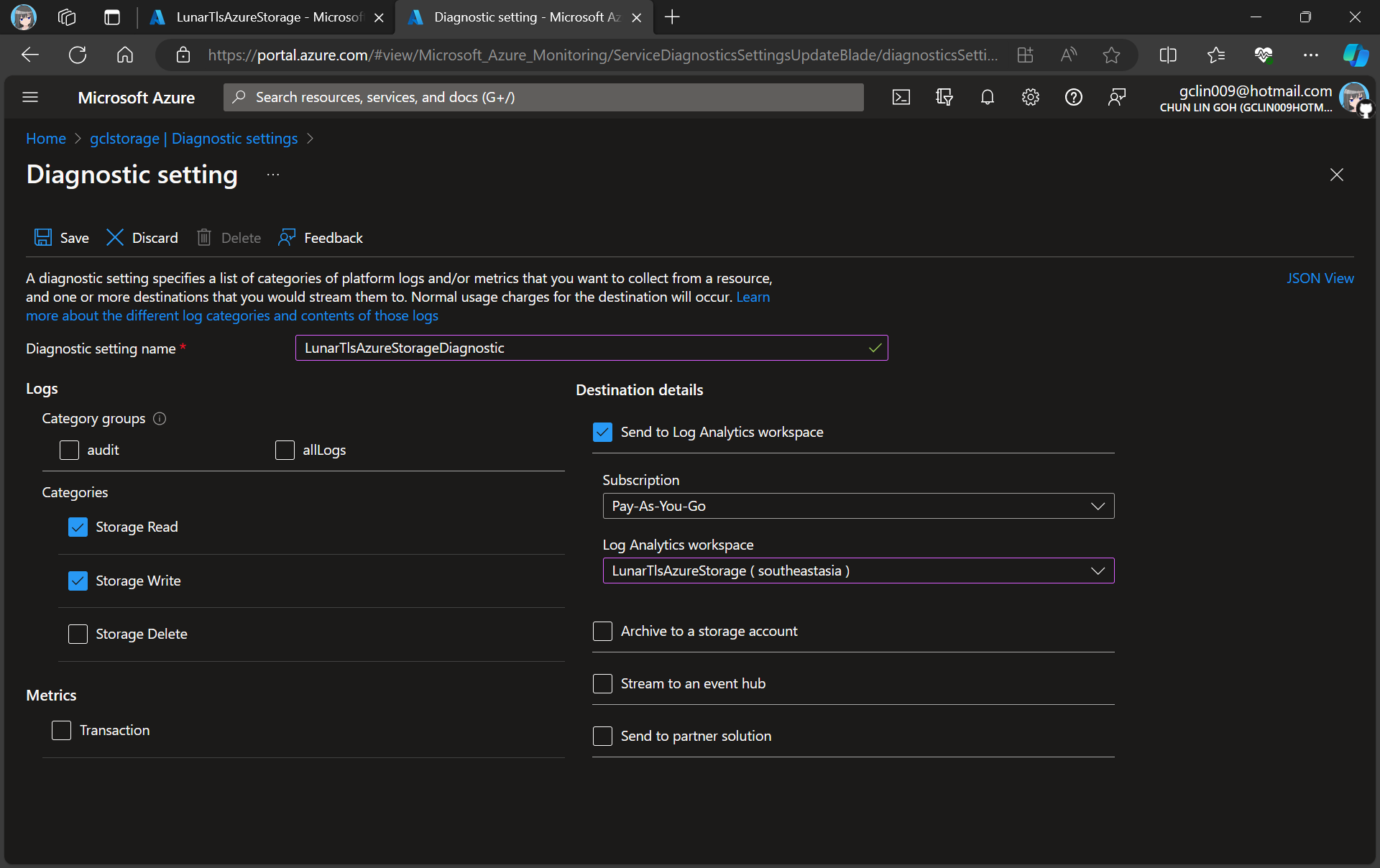
In the next step, we need to specify that we would like to collect the logs of only read and write requests of the Azure Blob Storage. After that, we will send the logs to Log Analytics we have just created above.

Creating a new diagnostic setting for our blob storage.

After we have created the diagnostic setting, requests to the storage account are subsequently logged according to that setting.

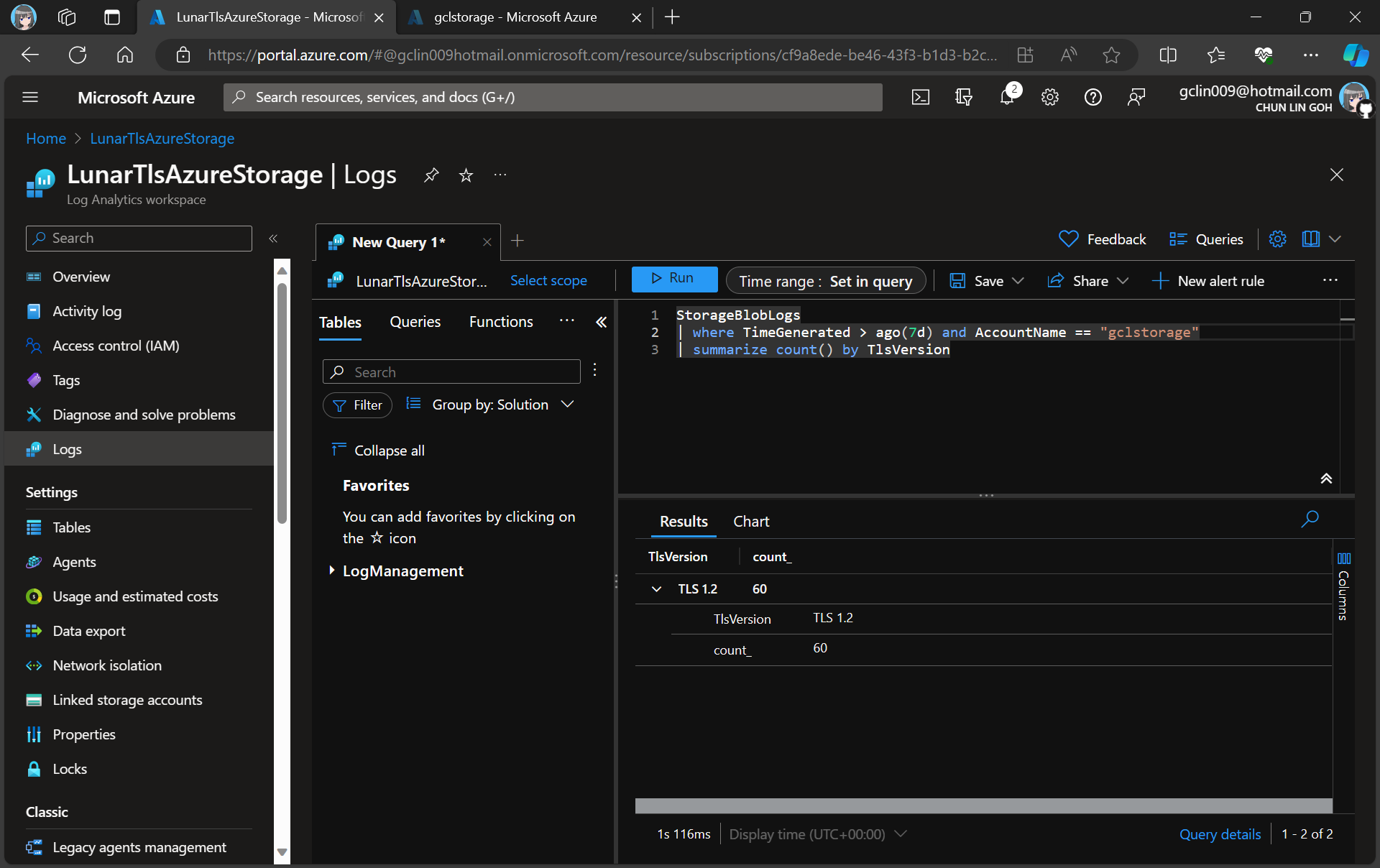
As demonstrated in the following screenshot, we use the query below to find out how many requests were made against our blob storage with different versions of TLS over the past seven day.

There are only TLS 1.2 requests for the “gclstorage” blob storage.

Verify with Telerik Fiddler

Fiddler is a popular web debugging proxy tool that allows us to monitor, inspect, and debug HTTP traffic between our machine and the Internet. Fiddler can thus be used to inspect and analyze both TLS and SSL requests.

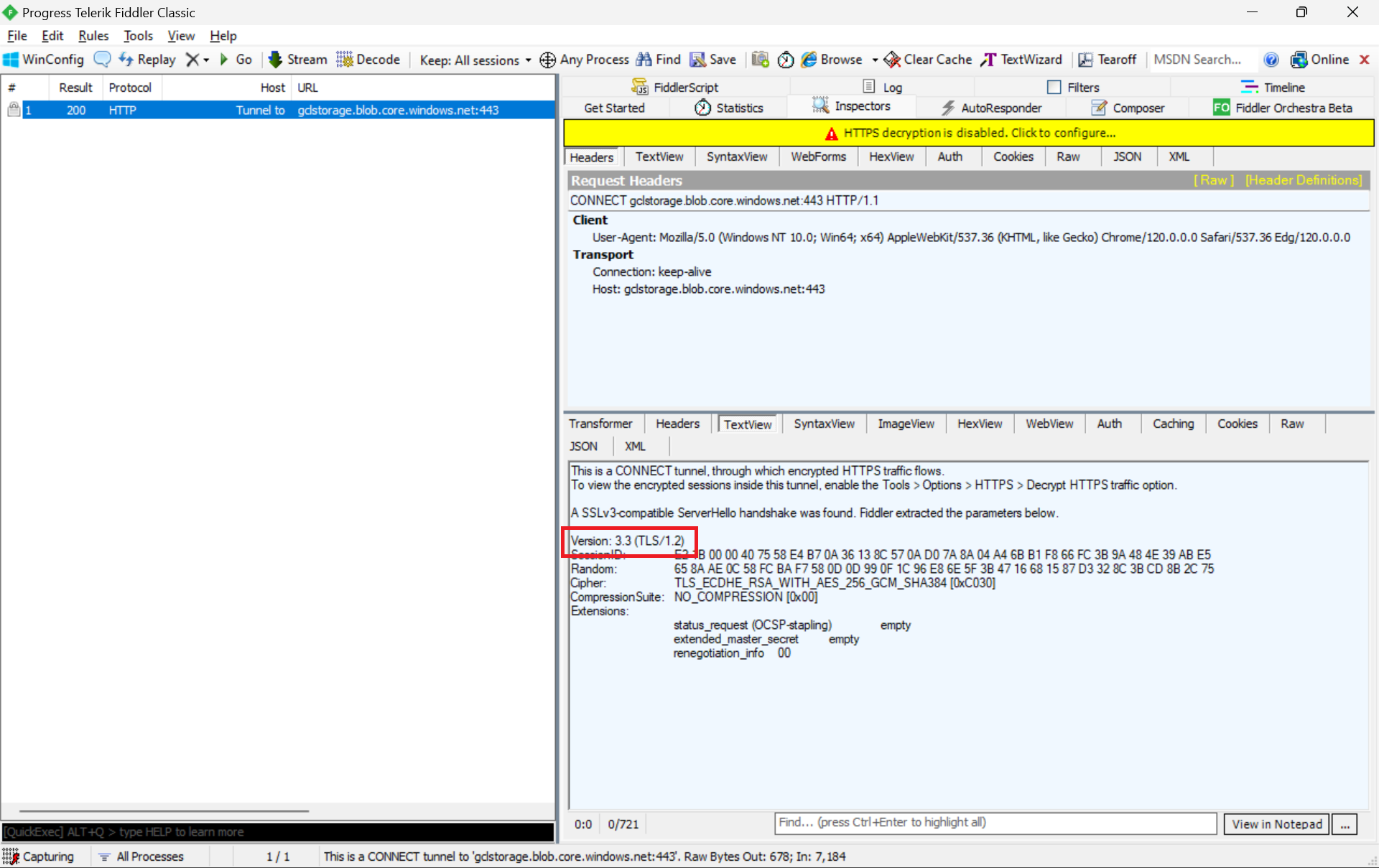
We can refer to the Fiddler trace to confirm that the correct version of TLS 1.2 was used to send the request to the blob storage “gclstorage”, as shown in the following screenshot.

TLS 1.2 is SSL 3.3, thus the version there states that it is version 3.3.

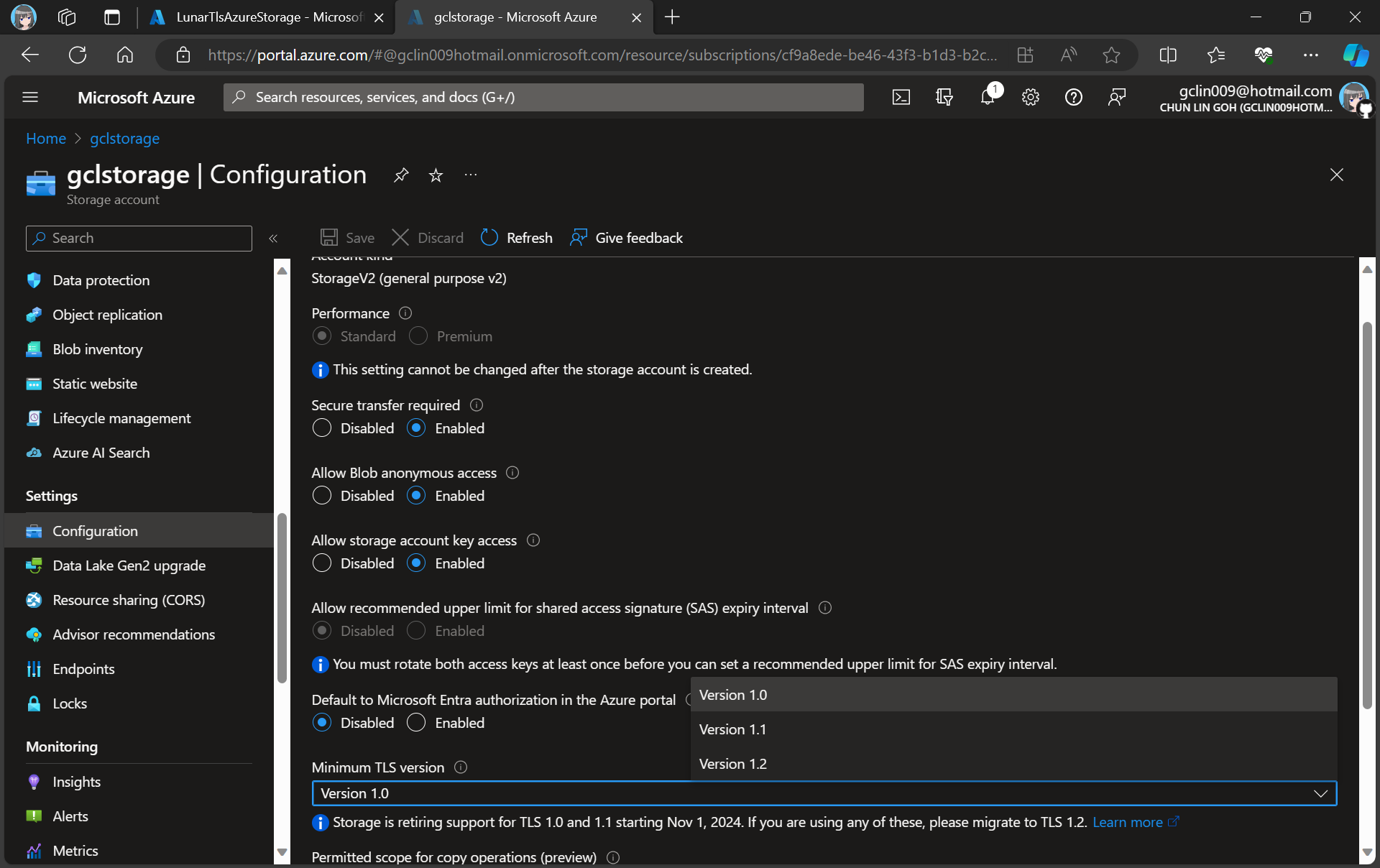
Enforce the Minimum Accepted TLS Version

Currently, the minimum TLS version accepted by storage account is set to TLS 1.0 by default before November 2014.

We at most can only set Version 1.2 for the minumum TLS version.

In advance of the deprecation date, we can enable Azure policy to enforce minimum TLS version to be TLS 1.2. Hence, we can now update the value to 1.2 so that we can reject all requests from clients that are sending data to our Azure Storage with an TLS 1.0 and 1.1.

Change in Kestrel for ASP .NET Core

Meanwhile, Kestrel, the cross-platform web server for ASP.NET Core, now also uses the system default TLS protocol versions rather than restricting connections to the TLS 1.1 and TLS 1.2 protocols like it did previously.

Thus, if we are running our apps on the latest Windows servers, then the latest TLS should be automatically used by our apps without any configuration from our side.

In fact, according to the TLS best practices guide from Microsoft, we should not specify the TLS version. Instead, we shall configure our code to let the OS decide on the TLS version for us.

Wrap-Up

Enhancing the security stance for Windows users, as of September 2023, the default configuration of the operating system will deactivate TLS versions 1.0 and 1.1.

As developers, we should ensure that all apps and services running on Windows are using up-to-date versions that support TLS 1.2 or higher. Hence, prior to the enforcement of TLS updates, we must test our apps in a controlled environment to verify compatibility with TLS 1.2 or later.

While TLS 1.0 and 1.1 will be disabled by default, it is also good to confirm these settings and ensure they align with your security requirements.

By taking these proactive measures, we should be able to have a seamless transition to updated TLS versions, maintaining a secure computing environment while minimising any potential disruptions to applications or services.

References

Kaizen Journey to be Microsoft Certified

In the rapidly evolving fields like software development, staying static in terms of technical skills and knowledge can quickly lead to obsolescence. Hence, the ability to learn independently is a crucial skill in a rapidly changing world. Self-learning allows software developers to acquire new skills and deepen their knowledge in specific areas of interest.

Renew my Azure Developer Associate Certificate

In the September, I was on a business trip to Hanoi, Vietnam. I thus decided to take the opportunity of my time staying in hotel after work to prepare for my Microsoft certificate renewal test.

To Hanoi, from Singapore!

Well, it took me some time to hit refresh on the latest updates in Microsoft Azure because in Samsung, I don’t work daily with it. Fortunately, thanks to Microsoft Learn, I am able to quickly pickup the new knowledge after going through the online resources on the Microsoft Learn platform.

As usual, I took down the notes of what I learned from Microsoft Learn. This year, the exam focuses on the following topics.

  • Microsoft Identity Platform;
  • Azure Key Vault;
  • Azure App Configuration and Monitoring;
  • Azure Container Apps;
  • CosmosDB.

I did pretty well in all the topics above with the exception of Azure Container Apps, where my responses to questions related to Azure Container Registry were unfortunately incorrect. However, I am pleased to share that despite this challenge, I successfully passed the renewal assessment on my first attempt.

Achieving success in my Azure exam at midnight in Hanoi.

Participating in the AI Skills Challenge

Last month, I also participated in an online Microsoft event. It is the Microsoft Learn AI Skills Challenge where we are allowed to choose to complete one out of the four challenges from Machine Learning Challenge, Cognitive Services Challenge, Machine Learning Operations (MLOps) Challenge, and AI Builder Challenge.

The AI Builder Challenge introduces us to AI Builder. AI Builder is a Microsoft Power Platform capability that provides AI models that are designed to optimise the business processes.

The challenge shows us how to build models, and explains how we can use them in Power Apps and Power Automate. Throughout the online course, we can learn how to create topics, custom entities, and variables to capture, extract, and store information in a bot.

Why Taking Microsoft AI Challenge?

Users login the Samsung app using face recognition technology from Microsoft AI (Image Credit: cyberlink.com)

Since last year, I have been working in the AI module in a Samsung app. I am proud to have the opportunity to learn about Microsoft AI and use it in our project to, for example, allow users login to our app using the face recognition feature in Microsoft AI.

Therefore, embracing this challenge provides me with a valuable opportunity to gain a deeper understanding of Microsoft AI, with a specific focus on the AI Builder. The AI Builder platform empowers us to create models tailored to our business requirements or to opt for prebuilt models designed to seamlessly address a wide array of common business scenarios.

In August, I finally completed the challenge and received my certificate from Microsoft.

WRAP-UP

By adopting a growth mindset, applying Kaizen principles, and following a structured learning plan, we can embark on our self-learning journey and emerge as a certified professional.

Besides Microsoft Learn, depends on what you’d like to learn, you can enroll in other online courses on platforms like Coursera, Udemy, and edX which offer comprehensive courses with video lectures, quizzes, and labs.

Once you have chosen your certification, create a structured learning plan. You can then proceed to outline the topics covered in the exam objectives and allocate specific time slots for each.

Anyway, remember, continuous learning is the path to excellence, and getting certification is only one of the steps in that direction. Just as software development involves iterations, so does our learning journey. We shall continuously refine our technical skills and knowledge.